

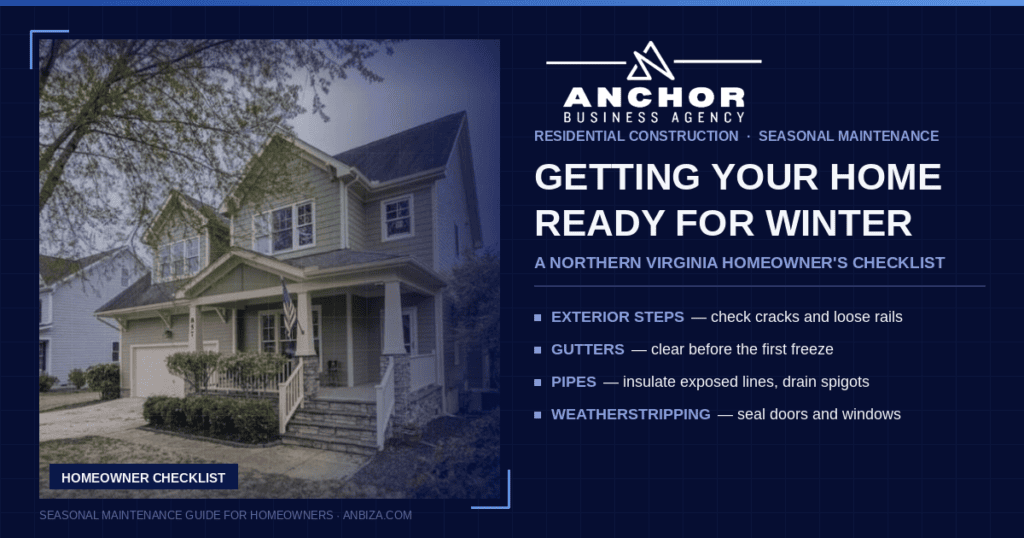
The leaves are coming down, the mornings are colder, and the first freeze in Northern Virginia is usually not far behind. A few hours of work now can save you a slip on an icy step, a cracked pipe or a repair bill in the spring. Here is the checklist we walk through on our own homes and with our clients every fall.
1. Check your exterior steps and entryways.
Exterior steps take the worst of winter. Walk each one and look for cracking, unevenness or a surface that has gone slick. Give any handrail a firm shake; if it moves, it will be worse after a season of freeze and thaw. If anything is loose, cracked or deteriorating, get it fixed before the first snow, not after someone slips.
2. Clean and seal the deck.
Sweep off leaves and pine needles; wet debris holds moisture against the boards and speeds up rot. Look for popped nails or screws and drive them back in. If water soaks into the wood instead of beading up, the deck is due for a sealer, and fall is the last good window before temperatures drop too low for it to cure.
3. Clear gutters and downspouts.
Clogged gutters overflow, and that water ends up next to your foundation, on your steps and on your walkways, where it freezes. Clean them after most of the leaves have fallen, and make sure downspouts carry water at least a few feet away from the house.
4. Protect your pipes.
Disconnect and drain garden hoses and shut off outdoor spigots from the inside if you have a shutoff valve. Look for pipes in unheated spaces like crawl spaces, garages and exterior walls, and insulate the ones that are exposed. A burst pipe is one of the most expensive winter repairs a homeowner can face, and one of the easiest to prevent.
5. Seal the gaps.
Check weatherstripping around doors and caulk around windows. If you can see daylight or feel a draft, you are paying to heat the outdoors. This is a simple weekend job with a caulk gun and a few rolls of weatherstripping.
6. Plan for ice before it arrives.
Stock ice melt that is safe for your surfaces (some products damage concrete and metal), and keep it near the doors you use most. Make sure exterior lighting covers your steps and walkways; the shorter days mean you come and go in the dark more often.
7. Think about safety for everyone in the house.
Winter is when falls happen. If you have aging parents, a family member with limited mobility, or you are planning to stay in your home for the long run, fall is a good time to look at grab bars in the bathroom, better lighting, or a ramp at the entry. Veterans may qualify for VA grants that help pay for accessibility modifications; our posts on HISA, SAH and SHA grants explain how those programs work.
8. Book the bigger projects now.
If your walk-through turns up a safety issue, an entry that needs to be made accessible, or any structural concern, call early. Fall and winter are a good time to get drawings, permits and fabrication done so the work is ready when you need it.
When to call a professional. Most of this list is weekend work. Anything structural is not: steps or framing that feel soft or uneven, metal or wood that has deteriorated, or a ramp or grab bar that needs to hold real weight. Those need to be built to code and anchored properly.
Anchor Business Agency is a licensed Virginia Class A general contractor and a service-disabled veteran-owned small business based in Manassas, serving homeowners, commercial clients and government agencies across Northern Virginia, Maryland and DC. Request a free consultation at anbiza.com or call (703) 594-0332.